

You live abroad and have a Dutch birth certificate
In this case, we can help you immediately. This is the most straightforward route.
- The entire procedure takes place online via video calls (MS Teams) or by telephone.
- You do not need to arrange anything with the municipality in the Netherlands.
- The processing of your new first name in the RNI (Register of Non-Residents) happens automatically; you do not need to contact a municipality in the Netherlands for this.
- Your lawyer will draft the petition and submit it to the Dutch court on your behalf.
This route is suitable for all Dutch nationals living abroad who do have a Dutch birth certificate.
You do not have a Dutch birth certificate (but you are a Dutch national)
If you were born abroad and have never registered a Dutch birth certificate, there is one mandatory initial step:
⭐ You must have your foreign birth certificate converted or registered yourself at the Municipality of The Hague (Department of National Tasks).
This is a legal requirement. A first name change is only possible if a Dutch birth certificate exists.
Once you have received a Dutch birth certificate, we can further assist you with the first name change:
- collecting evidence and documents
- drafting the petition
- submitting the first name change to the Dutch court
In this situation as well, you do not need to travel to the Netherlands.
Duur en kosten van de procedure
De exacte duur en kosten hangen af van de complexiteit van uw zaak. In de meeste gevallen geldt:
- De procedure duurt gemiddeld tot zes maanden vanaf het moment dat het verzoek bij de rechtbank is ingediend.
- Het griffierecht bedraagt EUR 341, hetzelfde voor alle rechtbanken in Nederland.
- Voor onze werkzaamheden hanteren wij een duidelijke prijsafspraak vooraf. Het vaste tarief voor de advocaat bedraagt EUR 619.
Lees ook de uitgebreide toelichting hoe de kosten zijn opgebouwd.
Which documents do you need?
For a first name change from abroad, the following are generally required:
- a valid form of identification
- a Dutch birth certificate (or: foreign certificate before it is converted)
- supporting evidence for your reason for the change
- for minors: consent from the other parent with authority or an explanation as to why it is missing
We will advise you exactly which documents are necessary for your situation, ensuring the file is complete from the start.
A name that causes problems abroad
It is not only Dutch nationals living abroad who qualify for a first name change. People living in the Netherlands who find that their name leads to problems abroad can also provide a compelling reason for a change.
Name difficult to pronounce or write abroad
A name that functions well within the Dutch language area can cause structural problems in an international context. Consider names that cannot be pronounced in other languages, are constantly recorded incorrectly in foreign systems, or lead to confusion at border controls and abroad because the name does not match how the person is known internationally.
Relevant factors for this request include the frequency with which the name causes problems, the concrete consequences in official or professional contexts, and any documentation of situations where the name has led to demonstrable issues.
Name with a negative meaning in another language
Some names are neutral or common in Dutch but have a negative, ridiculous, or otherwise burdensome meaning in another language. In practice, this can lead to discomfort, social reactions, or professional consequences in international environments.
Well-known examples include names that have a negative meaning in English, German, or another language. Whether this constitutes a compelling reason depends on how structural and demonstrable the burden is. An advisory meeting provides clarity on the feasibility of the request in your specific situation.
Name that does not fit in foreign systems
Some names are too long for foreign registration systems, contain characters that are not supported, or are truncated or altered with every booking or registration. This causes structural problems with travel, international contracts, or the use of official documents. In combination with other grounds, this can constitute a compelling reason. You can read more about the procedure on our first name change page.
How long does a first name change from abroad take?
The duration depends on your situation:
With a Dutch birth certificate:
- Within a maximum of 6 months, depending on the court.
- The municipality usually processes the change within a few weeks.
Without a Dutch birth certificate:
- You must first convert the foreign birth certificate yourself at the Municipality of The Hague. It takes an average of 13 months before the Municipality of The Hague processes your request. The municipality determines when to start; this can vary per period. Once the file is picked up and all documents are complete, the conversion usually takes about 6 weeks.
- After you have successfully completed this procedure, you can submit the request for a first name change to us.
How does the judge decide?
The court assesses whether there is a compelling reason for your request. Together, we look at how your personal situation can best be substantiated, for example when you:
- have been using a common first name for a long time (work, study, care);
- experience problems due to your current first name;
- feel your identity, safety, or background is better reflected in a different first name.
When applying to submit the change, we substantiate the petition with sound reasons. Therefore, we also ask you to send evidence of the use of your first name, correspondence, or documents that support your motivation.
Upon approval, your new first name will be processed in your birth certificate and subsequently in the RNI (Register of Non-Residents). After that, you can have your documents renewed at the embassy or consulate.
What happens after approval by the court? (For Dutch nationals abroad)
When the court grants your request for a first name change, your new first name is first processed in your Dutch birth certificate. Because you live abroad, the change is then recorded in the Register of Non-Residents (RNI). Below you can read exactly how this works and when you need to take action yourself.
Automatic processing in the birth certificate and RNI
After the court has granted the name change:
- The municipality where your birth certificate is held processes the change.
- Born in the Netherlands → processing by your municipality of birth.
- Born abroad → processing by the Municipality of The Hague (Department of National Tasks), after your certificate has been converted there previously.
- The municipality passes your updated details to the RNI.
- The RNI then updates your personal details in the basic registration for non-residents.
In almost all cases, you do not need to do anything yourself
The processing happens automatically.
You do not need to travel to the Netherlands and you do not need to contact a municipality or RNI desk.
When do you have to visit an RNI desk in the Netherlands?
A personal visit to an RNI desk is only necessary in exceptional situations — this is rare, but it is important to mention it correctly.
You must go to an RNI desk if:
- your personal details were not correctly or completely recorded in the RNI in the past, or
- previous changes (for example, through adoption, recognition, or a previous procedure) have not been correctly processed, or
- your name in your passport differs from the registration in the RNI.
This aligns with the official government instruction: “Was your name already changed before you moved abroad and was it not correctly recorded in the RNI? Then contact your last municipality of residence in the Netherlands.”
What should you bring in that case?
- a valid passport or valid ID card;
- the original documents with which your personal details were changed (e.g., birth certificate with mention, court order);
- any legalized or translated foreign documents, if applicable.
How often does this occur?
Within our practice: approximately 5% of cases.
Renewing your passport or ID card
Once your new first name is in the RNI, you can have your documents renewed at the:
- Dutch embassy, or
- the Dutch consulate in your country of residence.
The embassy usually requests:
- your extract from the birth certificate mentioning the change, and
- the court order.
Special situation: foreign birth certificate converted in The Hague
When your foreign birth certificate has been converted at the Department of National Tasks (Municipality of The Hague), then:
- The Hague processes the first name change in the Dutch birth certificate;
- passes this on to the RNI;
- and a personal visit to an RNI desk is usually not necessary.
An RNI visit may still be required only in the event of errors in previous registrations.
Brief summary
- Your first name change is automatically processed in your birth certificate and the RNI.
- In 95% of cases, you do not need to arrange anything with a municipality or RNI desk.
- A personal RNI visit is required only in exceptional cases.
- Afterwards, you can easily renew your passport and ID at the embassy or consulate.
Want to know more about the general procedure?
Would you like to know what the full procedure, costs, and legal criteria look like?
Then read our extensive page on first name change.
Why Simmelink Lawyers when Changing your First Name?
- At Simmelink Lawyers, we combine in-depth knowledge of name law with years of experience in family law, international family law and inheritance law.
- Specialized name law practice
We structurally handle requests for first name changes, both simple and very complex cases. - Pioneer in x-status and gender-related requests
Our office has been involved in groundbreaking procedures regarding the so-called x-status. We take that experience with us in cases where identity, gender and registration come together. - International expertise
For Expats and clients with ties to multiple countries, we not only look at the Dutch registration, but also at the consequences abroad. - Strategic, calm guidance
A first name change often touches on personal themes. We provide peace, overview and a clear step-by-step plan, so that you feel supported throughout the entire procedure. - Clear communication about costs and feasibility
You know what to expect in advance. No surprises afterwards, but concrete agreements about price, duration and chance of success.
What Clients Say about Simmelink Advocaten


Simmelink Advocaten distinguishes itself through expertise and thorough knowledge. My case was handled correctly without any unexpected costs, which they had accurately estimated in advance.
Excellent law firm! The team is very friendly, communication is clear, and commitments are always kept. I highly recommend this firm for legal support.
The resolution of my alimony calculation by Simmelink was swift and efficient, and I am very pleased with the result. They are approachable and have extensive knowledge.
Law firm Simmelink is very professional and client-oriented. They understand the client’s needs and go above and beyond to assist. Rarely do you see a company where the customer is as central as at Simmelink.
Who are our Attorneys and Mediators
You work with experienced attorneys, specialized in family law, international family law, and inheritance law. We communicate clearly, respond quickly, and keep you continuously informed.

Carla Simmelink – Family Law Attorney, International Family Law and Inheritance Law
Family Law Attorney, International Family Law and Inheritance Law
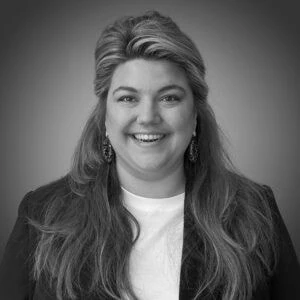
Valerie Lingg – Family Law Attorney, International Family Law
Family Law Attorney, International Family Law

Eva Zaunbrecher-Boschloo – Family Law Attorney, International Family Law
Lawyer at Law (International) Family Law

“Clients are guided by a dedicated lawyer who oversees the entire file and communicates discreetly.”
Mr. Carla Simmelink, lawyer
Are you considering changing your first name?
Receive our free guide now with everything you need to know about changing your first name.
Valid reasons for a name change
Step-by-step explanation of the procedure
Understanding the timeline and costs
Click below to download the e-book and take the first step towards a name that truly suits you.

